


Hexiwords
4.839.00 Reviews
App Specs
- Version
- 1.0.2
- Updated On
- License
- Free
- Downloads
- 10,000+
- Developer
- Second Gear Games
- Categories
- Word
- Platform
- Android
Screenshots
 Analysis by AppCompare
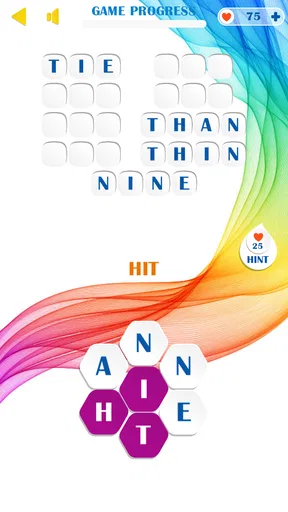
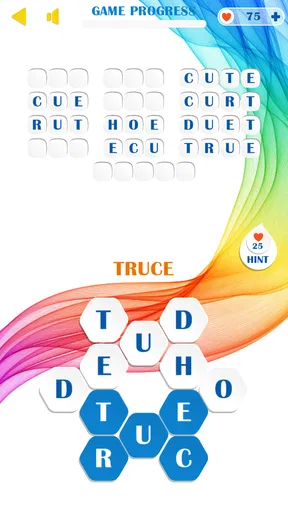
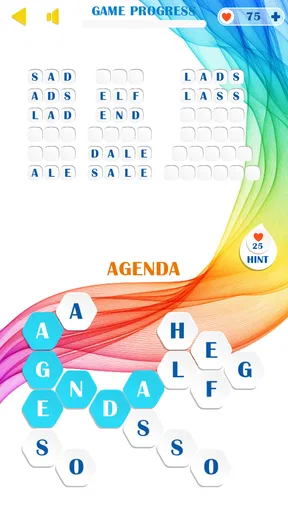
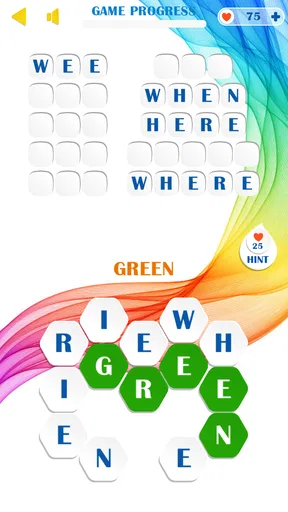
I went into Hexiwords expecting a small word game for filling a few spare minutes, and that is exactly where it makes the most sense. Its central idea is easy to understand: connect letters and uncover hidden words. The appeal is not a large story or a complicated rule set, but the quiet satisfaction of seeing a loose group of letters become a complete answer through your own observation.
That simplicity gives the game an immediate, low-pressure feel. I did not need a long tutorial or a commitment to a lengthy session before I understood what it wanted from me. At the same time, the hexagonal presentation gives the familiar word-puzzle format a slightly different shape. Instead of feeling like a standard list of clues, the board encourages me to look at relationships between nearby letters and test possible paths.
Developed by Second Gear Games, this is a free word game for players who enjoy short puzzles, gradual discovery, and a calm pace. It is suitable for Everyone, and the Android release supports devices using version 5.0 or later. The current version is 1.0.2, while the game has reached over ten thousand installs and holds a 4.8 average from around four hundred ratings. Those figures suggest that its focused design is connecting with the audience it is aimed at, although popularity alone does not make every puzzle style a good match for every player.
How the first minutes feel
The strongest part of my first impression was how quickly the game communicates its purpose. I am not asked to learn several systems at once. The board, the letters, and the act of connecting them carry nearly the entire explanation. That makes it a comfortable choice when I want something I can open without remembering a complicated objective from a previous session.
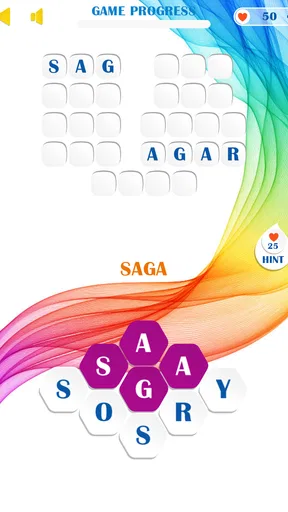
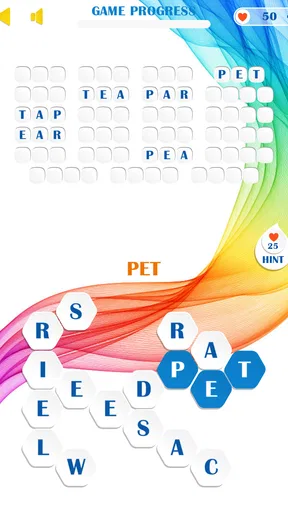
The hexagonal arrangement also affects how I read the screen. In a conventional crossword, I tend to scan rows and columns. Here, the shape encourages a more circular and branching way of thinking. A letter may look unhelpful when I consider it alone, then become useful when I trace a possible route through neighboring spaces. That small change is important because it gives the familiar act of finding words a tactile sense of direction.
I found the game most enjoyable when I resisted the urge to force an answer immediately. My first instinct was often to search for the longest word I could see. A better approach was to begin with obvious short combinations, use them to understand the board, and then return to the less certain areas. This is one of the first practical lessons the layout teaches: the puzzle is not only about vocabulary, but also about managing attention.
That makes it easy to recommend for a commute, a waiting room, or a brief break between tasks. A realistic everyday use would be opening it while waiting for a coffee, completing a little progress, and closing it without feeling that I have abandoned an important story or lost the thread of a larger campaign. It works as a mental reset rather than as a demanding second job.
Worth Reading Before You Choose

EA SPORTS FC Mobile 26 Is a Bigger Football Game, but It Takes Time

Flipboard Shows What News Apps Must Do Beyond the Feed

Switching to Android Auto Means Rethinking Your Driving Routine

Google Calendar Makes a Crowded Week Easier to Manage

Ludo King Makes the Most of the Minutes Between Plans

Baby Panda World Brings Quick Play to Modern Phones, but Its Game Library Feels Busy
A visual language built around connection
The setting is abstract, but the board still creates a recognizable mood. The hexagonal structure gives the game a neat, orderly identity, and the hidden-word goal supplies the sense of discovery. I do not need characters or a detailed fictional world to understand what I am doing. The environment is the puzzle itself, and every successful connection makes that environment feel more legible.
That is a sensible artistic choice for this type of game. A busy background or a strong narrative theme could distract from the letters, especially when the challenge depends on comparing small visual details. The restrained presentation keeps my attention on the path I am forming. In this case, the absence of a large setting is not a weakness by itself; it is part of the game’s clean language.
The shape also helps separate this experience from ordinary word searches. A traditional word search usually asks me to inspect a grid for words that may run in several directions. Hexiwords instead makes the act of connecting feel central. I am not simply scanning a page for a hidden line. I am experimenting with adjacency, possible sequences, and the way one discovery changes the remaining board.
One useful habit is to treat the board as a network rather than as a collection of isolated letters. When I find one promising route, I look at which nearby letters it leaves available. This can reveal a second word or show that my first guess was using a valuable letter in the wrong place. That kind of planning is a modest but meaningful step beyond random swiping.
The visual approach is also friendly to players who prefer clear goals over decorative presentation. If you are looking for a word game with a strong story setting, expressive characters, or a richly illustrated world, this will probably feel spare. If you want the board to remain the main event, the simplicity works in its favor.
Sound, rhythm, and the space between puzzles
The game’s mood depends heavily on pacing. Because the objective is compact, each successful word can feel like a small beat in a larger rhythm: inspect, try, recognize, and continue. That rhythm is more important here than dramatic action. The pleasure comes from maintaining a steady flow of attention, then enjoying the pause when a difficult section finally makes sense.
I would describe the overall experience as quiet and focused rather than energetic. That matters when choosing where to play. It suits moments when I want to settle my mind, but it is less appropriate if I am looking for excitement, competition, or a strong audiovisual spectacle. The game’s identity comes from concentration, not from constant stimulation.
Sound should support that kind of play rather than compete with it. In a word puzzle, audio is most useful when it reinforces a successful connection and gives the session a sense of completion without becoming distracting. The same principle applies to visual feedback: a clear response helps me understand that the gesture worked, while excessive effects would interrupt the mental process of searching for the next word.
The pacing also gives the game a useful advantage over some faster alternatives. I can pause naturally after solving one part instead of feeling pushed into another round. That makes it suitable for short sessions and for players who enjoy solving at their own speed. The trade-off is that anyone who needs constant novelty may find the calm structure too restrained after extended play.
My advice is to play it in the way its rhythm suggests. Give each board a few uninterrupted minutes, but do not treat every puzzle as a test that must be completed immediately. If a group of letters is not becoming clear, stepping away and returning later can be more effective than repeatedly tracing the same guesses. The game benefits from a relaxed mindset because word recognition often improves when I stop staring at one possibility.
Why the mechanics fit the mood
The core mechanic and the presentation support each other well. Connecting letters is simple enough to understand instantly, while the hexagonal layout adds enough structure to make each board worth examining. The game does not need a complex rule system to create decisions. The decisions come from choosing where to begin, which possible word to test, and whether a promising path helps or harms the rest of the puzzle.
This is also where the game differs from a standard crossword. Crosswords usually depend on clues, crossing answers, and a more explicit definition-based process. A word search depends on spotting a known sequence hidden in a larger field. Hexiwords sits closer to visual word discovery: I use the letters in front of me, connect them, and gradually uncover what the board is asking me to notice.
That distinction affects who will enjoy it. Players who like anagrams, letter chains, and spatial arrangements should find the format approachable. Players who mainly enjoy cryptic clues or detailed definitions may miss the linguistic depth of those formats. Neither approach is better in every situation; they simply exercise different parts of the brain. I would choose this game for pattern recognition and relaxed vocabulary practice, not for advanced clue solving.
A second useful strategy is to separate certainty from possibility. When I see a word that definitely fits, I use it as an anchor. When I only have a vague fragment, I avoid building the whole board around it. This prevents one attractive but incorrect guess from dominating the session. It also makes the game feel less random because every move has a reason, even when the reason is simply testing an idea.
Another trade-off is the relationship between accessibility and challenge. The basic interaction is approachable for younger players and casual users, which matches the Everyone age rating. Yet familiar controls do not guarantee that every board will feel easy. The difficulty of a word puzzle can come from an ordinary word being hidden in an unexpected arrangement, from several plausible paths competing for attention, or from the player overlooking a short answer while searching for something more elaborate.
That makes it a reasonable family-friendly option, especially when people want to compare guesses or solve alongside one another. I can imagine one person spotting a route while another supplies the missing word. It is less suited to someone who wants a competitive leaderboard, a narrative reward loop, or a large collection of unrelated mini-games in one application.
Practical expectations before downloading
The game is free to download, but it includes in-app purchases ranging from $1.99 to $19.99 per item. I would keep that in mind before starting if you prefer a completely purchase-free experience. The free entry point makes it easy to try the basic style first, while the presence of optional spending means the app should be approached with the same awareness I would use for other free mobile games.
Its Android compatibility is also relatively broad because it requires 5.0 or later. That does not guarantee identical performance on every device, but it does make the game accessible to people using older Android hardware. Since this is a focused word puzzle rather than a visually demanding action title, its appeal is not tied to owning a recent phone.
Version 1.0.2 suggests a relatively focused release rather than a mature platform with years of accumulated systems. I see that as both a benefit and a limitation. The benefit is a direct, uncluttered experience. The limitation is that players looking for extensive customization, deep progression, or a wide variety of modes may find the scope modest.
Before downloading, I would ask myself what kind of break I want. If I want a calm letter puzzle that can fit around daily routines, this is a sensible choice. If I want a game that rewards long sessions with a major story, character development, or fast competition, I would look elsewhere. The decision is less about whether the game is good in the abstract and more about whether its narrow focus matches my habits.
Who gets the most from it
I think the best audience is anyone who enjoys word games but wants a presentation that feels more spatial than a plain list of clues. It is particularly suitable for casual players, families, and people who like to solve one compact challenge at a time. The clear premise also makes it approachable for someone who does not normally play games with elaborate tutorials.
It can be useful as a short concentration exercise, too. I would not treat it as a formal language-learning tool, because finding words is not the same as studying definitions, pronunciation, or grammar. However, it does encourage me to inspect letter patterns and recognize combinations I might otherwise skim past. That makes it a pleasant supplement to vocabulary-focused play, not a replacement for structured learning.
I would skip it if my main priority were a large social component, competitive ranking, or a richly themed adventure. I would also choose a crossword or clue-based app when I wanted precise definitions and a stronger sense of verbal deduction. A conventional word-search game may be better when I prefer to know the target words in advance and simply locate them visually.
For everyone else, the main question is tolerance for repetition. The central pleasure comes from refining the same basic action across different boards. That consistency is exactly why it is relaxing, but it may also feel narrow to players who need frequent mechanical changes. I enjoyed the focus, though I would alternate it with other genres during a long gaming session rather than expecting it to provide endless variety.
My final view of the atmosphere and play
What stays with me is the coherence between the board shape, the hidden-word objective, and the unhurried rhythm. The presentation does not try to turn a simple word puzzle into something louder than it needs to be. Instead, it creates a small space for looking carefully, testing connections, and enjoying the moment when the pattern becomes obvious.
The most important strength is that the mechanics feel purposeful. The hexagonal layout is not merely decoration; it changes how I search. The restrained mood is not separate from the challenge; it gives me room to think. Even the short-session format supports the design because each solved word feels complete without demanding a large time investment.
There are clear boundaries. The game will not satisfy players searching for a narrative world, intensive competition, or clue-heavy vocabulary puzzles. The free model also includes purchases, so I would make my decision with that in mind. Still, those limitations are easy to understand because the game is honest about its core identity: a focused word experience built around connecting letters and uncovering answers.
After spending time with it, I would recommend Hexiwords to a friend who wants a calm mobile puzzle for short breaks and enjoys discovering words through spatial patterns. I would suggest starting slowly, using certain answers as anchors, and letting difficult boards rest instead of forcing them. For that specific kind of player, the game’s modest scope becomes a strength: it offers a clear, playable mood and a mechanic that remains easy to pick up while still giving the mind something worthwhile to untangle.
In my view, Hexiwords works best when treated as a quiet daily companion rather than a complete all-purpose game. Its art direction, sound-led restraint, setting, and pacing all point toward the same experience: focused, gentle, and built around the satisfaction of making a connection that was hidden a moment earlier.
Pros
- Quick word puzzles are ideal for short breaks.
- Hexagonal layout gives classic word games a fresh twist.
- Increasing difficulty keeps experienced players engaged.
- Simple controls make it easy to start playing immediately.
- Offline play is convenient when you have no internet access.
Cons
- Some puzzles may feel repetitive after extended play.
- Hints can reduce the challenge for skilled word-game fans.
- Small hexagons may be difficult to tap on compact screens.
- Progression may feel slow without frequent play.
- The game may not appeal to users who dislike word puzzles.
FAQs for Hexiwords
What is Hexiwords and how do you play it?
Hexiwords is a word puzzle game built around connected hexagonal tiles. The main objective is to form valid words by selecting or linking letters on the board, usually while completing a specific puzzle goal or challenge. Its hexagonal layout makes word paths less predictable than in a traditional grid, so players need to look in multiple directions and combine short and long words strategically.
Is Hexiwords suitable for beginners?
Yes. Hexiwords is generally approachable for beginners because the core idea is easy to understand: find words from the available letters and complete the objective shown on the screen. The early puzzles typically provide a gentle introduction, while later stages become more demanding by using larger boards, less obvious word combinations, or tighter requirements. It is also a good choice for casual players who prefer relaxed, bite-sized challenges.
Does Hexiwords require an internet connection?
Hexiwords may be playable without a constant internet connection, which is convenient for short sessions during travel or when mobile data is unavailable. However, online access can still be necessary for certain features, such as advertisements, cloud synchronization, updates, leaderboards, or in-app purchases. For the most reliable experience, open the game online at least once after installation and check which features remain available offline on your device.
Is Hexiwords free to download, and does it contain ads or purchases?
Hexiwords can typically be downloaded for free, but the free version may be supported by advertisements and may offer optional in-app purchases. These purchases can include ad removal, hints, extra lives, or other convenience features, depending on the version available in your region. The game can usually be enjoyed without spending money, although players who use hints frequently may encounter limits or prompts to purchase additional help.
What should I know about privacy and device compatibility before installing Hexiwords?
Before installing Hexiwords, check its current store listing for supported Android or iOS versions, required storage space, and the permissions requested by the app. Word games normally need only basic access, but advertising, analytics, notifications, or account-related services may involve additional data collection. Privacy details can change with updates, so reviewing the developer’s privacy policy and recent user reviews is recommended before downloading.


